A Practical RF Impedance Matching Guide for Engineers

RF impedance matching is a key part of designing reliable RF systems. This RF impedance matching guide explains how matching works, why it matters, and how engineers can apply it in real-world designs to improve signal transfer and reduce unwanted reflections. When impedance is not properly matched between components, part of the signal is reflected […]
Choosing RF Components for X-Band Radar Systems
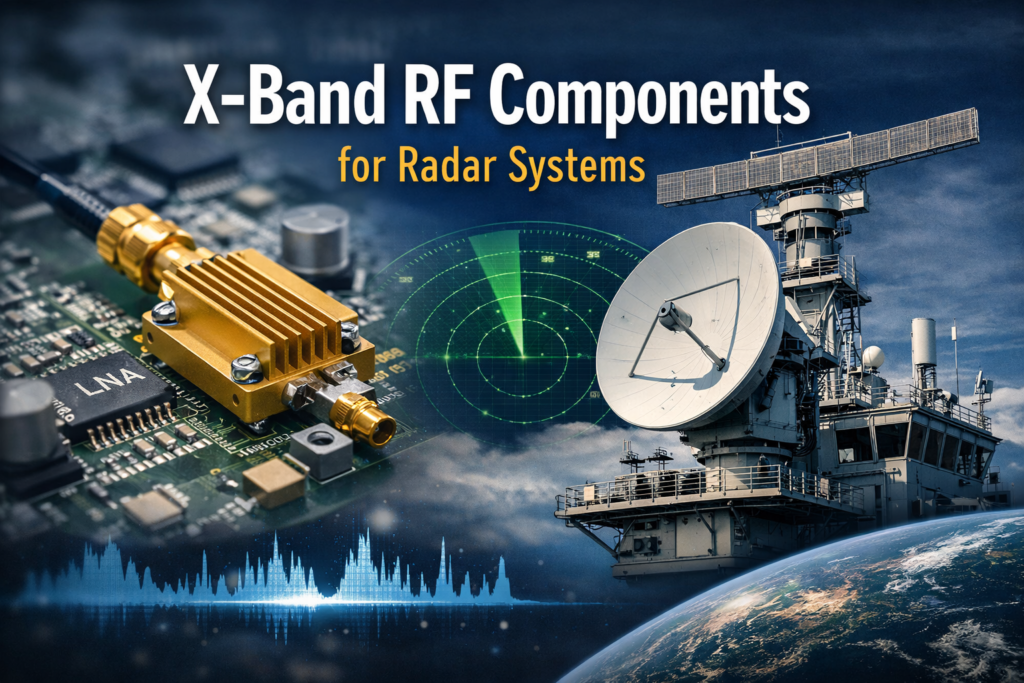
X-band RF components When designing radar systems, selecting the right X-band RF components is essential for achieving reliable detection, stable performance, and consistent operation in demanding environments. X-band frequencies, typically ranging from 8 to 12 GHz, are widely used in applications such as marine radar, weather monitoring, defense systems, and industrial sensing. At these frequencies, […]
How to Reduce RF Amplifier Noise Figure in Design

When working in RF amplifier design, one of the most important performance factors to manage is the RF amplifier noise figure. It has a direct impact on how well a system can detect weak signals, especially in applications like wireless communication, radar, and industrial IoT. A lower noise figure leads to a better signal-to-noise […]
GaN RF Power Transistor vs LDMOS: Which Should You Use?

Understanding GaN RF Power Transistor Technology A GaN RF power transistor is built using gallium nitride, a wide bandgap semiconductor material. This allows the device to operate at higher voltages, higher frequencies, and higher power densities compared to traditional silicon-based technologies. Because of its material properties, GaN technology offers: Higher efficiency at high frequencies Smaller […]
RSS FEED